Sony Bravia 9 vs TCL QM7K, QM6K, QM8K: What Buyers Actually Get at Each Mini-LED Price Tier
Buyers evaluating mini-LED TVs face a question that product pages don't answer clearly: when does Sony's processing quality justify paying significantly more than a TCL? The evidence from buyers who compared these products directly shows a consistent pattern — TCL's QM7K earns the community recommendation as the mini-LED sweet spot, QM6K is the default budget pick, QM8K is only justified for specific bright-room conditions, and the Sony Bravia 9 earns its premium specifically when processing quality and brand support are worth the cost difference. This guide draws from buyers who compared these products, switched between them, or returned one for another.
Head-to-Head
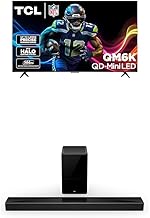
Community default for buyers under $600. Near-universal recommendation at its price tier — no competing mini-LED earns more recommendations at $529–$600.
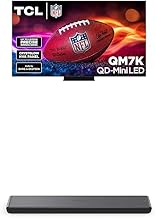
Mini-LED sweet spot. Multiple buyers describe it as 'worth the $150–200 over QM6K' for movies. Community consensus: best picture quality under $1000.
The TCL value stack: QM6K, QM7K, QM8K and what each step actually buys
TCL's mini-LED lineup has achieved an unusual degree of community clarity. Buyers who have compared models within the range report consistently:
QM6K ($529–$600): The community default for budget buyers. Multiple independent recommendations name it as the only meaningful choice at its price point — 'hands down the QM6K' and 'the only good TV listed here' at $600. The Costco QM6K Pro variant at $529 with a 5-year warranty is specifically cited as exceptional value. Gaming looks great per PS5 and Xbox owners. The limitation: backlight bleed in dark rooms, and the knowledge that QM7K is a noticeably better TV.
QM7K ($750–800): The sweet spot. Buyers who saw both side-by-side at Best Buy describe the QM7K as 'noticeably brighter with better color.' Multiple buyers who purchased QM6K describe wishing they had stretched the budget. For movies and demanding content, the extra $150–200 is consistently described as worthwhile. This is the recommendation when budget allows any flexibility above $600.
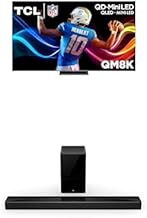
QM8K ($1000–$1400 depending on size): Only earns its premium for bright-room conditions. One buyer with four large windows that overwhelmed prior TVs confirms the QM8K solved the problem. For typical viewing conditions, multiple buyers conclude the QM7K is better value. The QM8K is specifically the recommendation when peak brightness is the primary constraint.
Where Sony Bravia 9 earns its premium — and where it doesn't
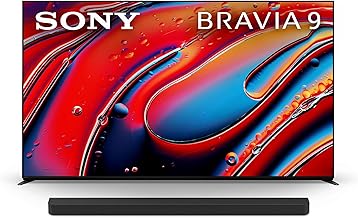
The Sony Bravia 9 costs significantly more than TCL's QM7K for a reason buyers debate directly. Here's what buyer evidence supports as genuine advantages:
Sports and live TV: Sony's XR processor is specifically mentioned as better for sports content than TCL's processing. Buyers who watch a lot of sports describe Sony's motion handling as visibly superior in this content type. TCL's motion processing is acknowledged as not matching Sony's quality.
Out-of-box picture quality: Sony's XR processor provides scene-specific calibration that TCL's processing doesn't match. Buyers who don't want to calibrate or adjust their TV find Sony's default picture more satisfying across a wider range of content.
Sony ecosystem and support: For buyers who have Sony soundbars, PlayStation consoles, or other Sony devices, the ecosystem integration is an additional value. Sony's support reputation generally exceeds TCL's for long-term ownership.
Where TCL QM7K wins: Raw value per dollar. Multiple buyers who compared Bravia 9 and QM7K side-by-side describe the picture quality difference as smaller than the price difference justifies for typical viewing. If sports and out-of-box calibration are not your priorities, the TCL QM7K regularly wins the value comparison.
Switching behavior: who moved between these products and why
The 12 switching signals in this candidate cluster reveal patterns that spec comparisons don't capture:
Within TCL: QM6K to QM7K is the dominant switch direction — buyers who purchased QM6K describe discovering in retrospect that the QM7K was worth the extra cost. This pattern recurs enough that community advice consistently preempts it: 'get the QM7K if your budget at all allows it.'
TCL to Sony: Some buyers who purchased TCL mini-LED and found the processing quality unsatisfying for sports or demanding content moved up to Sony Bravia 9 on a second purchase. The processing quality gap becomes most apparent for sports viewers.
Sony to TCL: Buyers who found Sony's premium difficult to justify against TCL's value — especially for gaming-primary use cases where Sony's processing advantage matters less — chose TCL on the second purchase. The 'QM7K at $800 vs Bravia 9 at $1500+' decision frequently resolves to TCL for gaming-focused buyers.
Decision guide: which mini-LED for which buyer
Your budget is $600: TCL QM6K. Community default, no competing recommendation at this price. Costco QM6K Pro at $529 with 5 years warranty is the specific value callout.
Your budget is $750–900 and you watch movies: TCL QM7K. The sweet spot recommendation — noticeably better than QM6K for movies, much better value than Sony at this price range.
Your room is very bright (4+ large windows): TCL QM8K over QM7K only if you genuinely need peak brightness beyond what QM7K delivers. QM7K first unless you have evidence that standard mini-LED brightness isn't enough for your room.
Sports is your primary content: Sony Bravia 9. Sony's XR processing for sports motion is the clearest advantage over TCL that justifies the premium. If sports is secondary, the premium is harder to justify.
You want the best picture quality and price is secondary: Sony Bravia 9 for mini-LED, or consider LG C5 OLED for dark-room viewing where OLED's perfect blacks exceed what mini-LED can achieve.
Evidence Highlights
Multiple buyers who compared QM6K and QM7K side-by-side describe QM7K as noticeably brighter and worth the upgrade; QM6K buyers frequently describe wishing they stretched
Multiple independent buyers name QM6K as the only strong recommendation at $529–$600; community consensus is unusually clear at this price tier
Sony's processing quality is consistently cited as the justification for the premium over TCL — specifically for sports motion and natural-looking content rendering
Owner with 4 large windows confirms QM8K solved an extreme brightness problem; most buyers conclude QM7K is better value for typical conditions
Check current prices
This guide is built from audited buyer discussion evidence — no paid placements, no sponsored rankings. Product inclusion and ranking are determined by evidence volume, sentiment balance, and recurring themes. Read our methodology →